Diego Castel
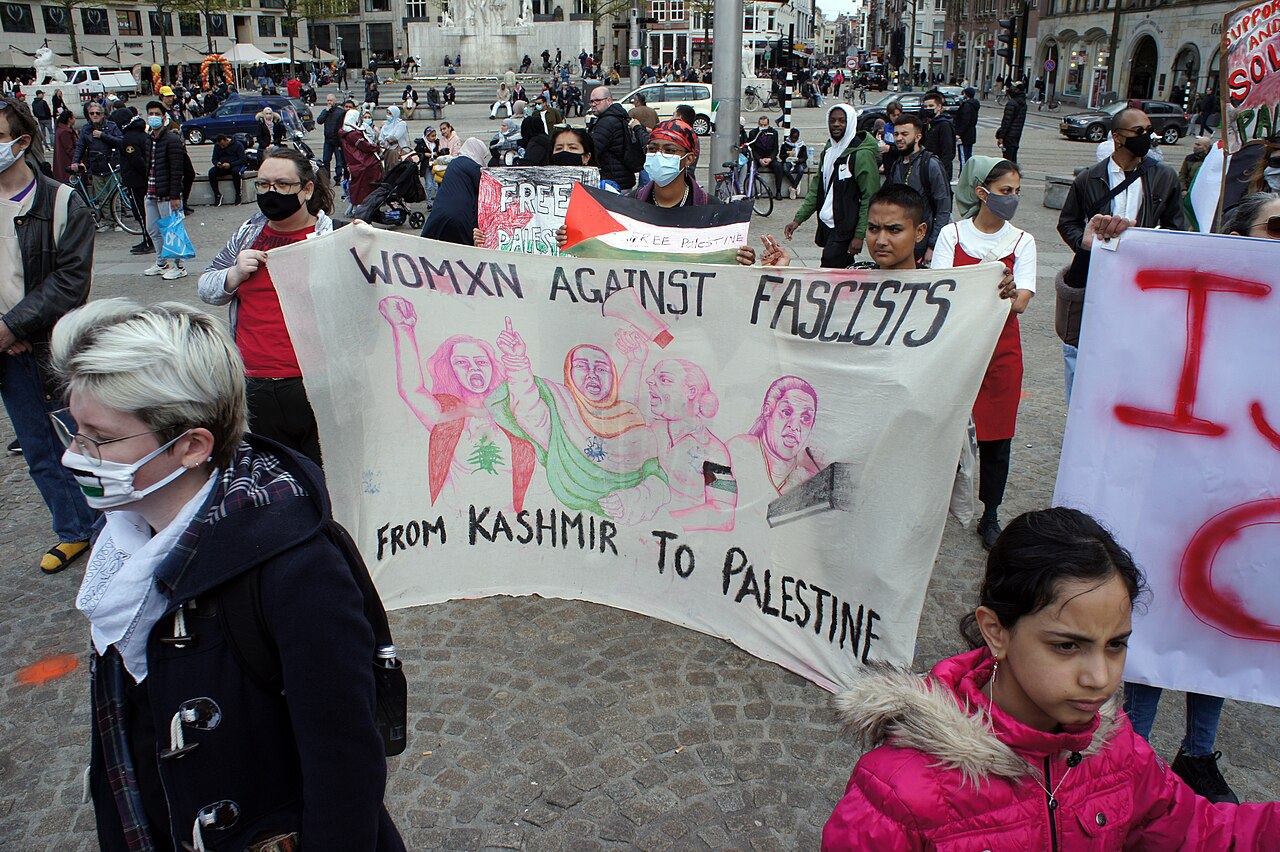
Europe likes to speak the language of values: democracy, rights, peace, multilateralism. But values are never just slogans. They are practiced through institutions, and institutions only move when someone builds power that can endure. If Europe is serious about listening, unlearning, repairing, and redistributing power beyond its borders, we should first ask what kind of power is being built inside European democracies right now, and through which infrastructures of collective action people learn to act together.
For much of the twentieth century, that question had an obvious answer. Parties were anchored in workplaces. Trade unions were not only bargaining machines but civic schools, capable of turning everyday routines into political identities. That ecosystem has been thinning out for decades. As Richard Sennett argued in The Corrosion of Character, deindustrialization, precarious work, fragmented careers, and neoliberal restructuring have made “class” harder to live as something shared and easier to carry as something private. The demand for radical change, however, did not disappear. It moved, sometimes quietly, sometimes all at once.
You can see that relocation in the electoral fortunes of Europe’s radical left. Over the last fifteen years, these forces have swung between breakthroughs that, in the old communist phrase, ‘stormed the skies’ and painful collapses. Explanations often retreat into internal factors: charismatic leadership, organizational novelty, freshness of brand and message. All of that matters. Still, it does not fully explain why some radical left parties become viable vehicles for social anger while others stagnate. To understand the difference, we need to look outside: at the social ecology around them, what happens in the streets and not only in parliaments.
To explore that ecology, I assembled a comparative dataset of 35 European countries, using their most recent national elections between 2021 and 20251. I examined the aggregated radical left vote and, where it made sense, the vote for the main radical left party. Then I tested whether protest and trade union strength help account for these outcomes once we control for macroeconomic conditions, distrust in the EU, turnout change, and party competition.
A necessary caveat: correlation is not causation. This is not a causal design. The association can run in both directions, and unobserved factors can shape both protest and voting. The aim here is more modest and, I think, still useful. I want to see which correlates stand out consistently across contexts, and then ask what that pattern implies for strategy, organization, and the future of European democracy.
Two variables stand out. The first is protest intensity, measured as the number of protest events per 100,000 inhabitants in the two years preceding each election. The second is institutional legacy: whether the radical left held parliamentary representation in the previous legislature. Across specifications, both protest and legacy are positively and statistically significantly associated with radical left electoral strength, while other factors do not show robust effects once protest and legacy are included.
The protest signal is striking. Holding other variables constant, more protests are associated with higher radical left vote shares. In the aggregated vote model, each additional protest event per 100,000 inhabitants corresponds to roughly four tenths of a percentage point more support2. It may sound small. But aggregated, and across countries that do not look the same politically, it points to something meaningful: when mobilization becomes routine, the radical left is more likely to become electorally relevant.
This suggests a concrete dynamic. When protest becomes part of the political “weather,” radical left parties stop looking like marginal options and start looking like plausible vehicles. Legacy matters too. A party that already occupies institutional space, with seats, staff, media access, local networks, and a recognizable name, has an advantage when new waves of anger arrive. When people search for a way to turn grievance into effective power, an already legible actor changes what feels realistic.
Together, protest and legacy suggest that radical left success today depends less on the classic labor nexus and more on an interaction between movement energy and institutional memory. Protest creates intensity: an atmosphere in which ordinary people experience politics as something they do, not only something done to them. Institutional footholds create continuity: an organizational bridge that can keep that intensity from evaporating once the media cycle moves on and the pressures of everyday survival return.
This helps clarify a puzzle in recent European politics. Many radical left parties emerge as movement parties, or as parties interwoven with movement networks, especially in moments of crisis. But movement energy is volatile. It rises, then it exhausts itself. Without durable structures, episodes of collective action can burn bright and fade quickly. Institutional footholds do not replace organizing. They can, however, store and redeploy political capacity over time, and they give movements a public face that is harder to ignore. Recent work describes this relationship as movement party co-evolution, with meaningful variation across contexts3.
Put simply: protest is not just noise or anger. It is recruitment, learning, and cultural signaling. It teaches what can be demanded, what can be risked, and what solidarities become imaginable. When that learning consolidates, parties can speak and act as part of a broader collective force. That force shifts what becomes politically thinkable and therefore politically transformable. People do not only vote; they also learn what they are entitled to demand.
So what about unions? The lack of robust effects here does not mean unions are irrelevant or that they no longer shape policy. It means something more specific: in this electoral cycle, standard indicators such as union density and bargaining coverage do not consistently predict radical left vote shares once protest and legacy are included. Union membership is often more stable, and frequently older, than the precarious sectors where anger concentrates. Institutional strength can coexist with political caution. The left has to treat that mismatch as a strategic reality, not as an abstract debate.
If protest tracks radical left breakthroughs more consistently than union density does, we should take seriously the idea that Europe’s organizational bases are shifting from factories to squares, from long term workplace membership toward episodic, networked mobilization. That shift can be energizing. It can politicize people who were never reached by older structures. It can also be fragile. Without durable care, training, and internal democracy, movements and movement linked parties can burn out, fragment, or become dependent on media cycles. The square is powerful, but it is not automatically durable.
All of this matters for Europe’s position in the world in a direct way. Europe’s global role is not only a question of foreign policy elites. It is shaped by domestic struggles over borders, climate, militarization, trade, and the meaning of solidarity. A Europe that claims it wants to “repair” beyond its borders must confront a hard fact: much of its stability rests on exclusion through border regimes, unequal mobility, outsourced violence, and selective memory. Whether those contradictions are challenged depends on who holds power inside Europe and how they obtained it.
Protest driven representation is double edged. On the hopeful side, contentious politics can generate new forms of internationalism. Movements learn transnationally even when institutions pretend they do not. Tactics travel, slogans translate, networks cross borders. We have seen it in solidarity mobilizations for Palestine across European capitals, and in housing movements growing in many cities, from tenants’ unions to mass demonstrations against speculation and evictions. When radical left parties respond to movement pressure, they can connect street level demands to legislative and municipal action.
But protest does not automatically produce inclusive internationalism. It can be captured by nationalist or exclusionary projects, and it can be met by securitization that normalizes emergency politics. In many countries, the far right also grows in polarized contexts. If the left fails to channel discontent expressed through mobilization, other actors can co-opt it and turn a moment of conflict into regression, where fear and punishment replace demands for justice. That is why institutional footholds and media presence matter. They make it harder for anger to be monopolized by reactionary entrepreneurs and help keep solidaristic frames visible in public life.
This is also why the presence of a transformative left inside institutions is vital. Street mobilization creates pressure, but without parliamentary footholds, national and European, that pressure often dissipates or gets absorbed into symbolic gestures. A left that is present in national parliaments and in the European Parliament can confront far right narratives and, at the same time, make social democracy sweat. It can force reforms and concrete proposals that shift the baseline of what is politically possible.
In Gramscian terms, this is a dialectic across three spaces that must reinforce one another if a counter hegemonic bloc is to last. Parliamentary institutions translate demands into binding decisions. Ideological arenas shape frames and common sense through media, culture, and everyday conversation. Street politics makes power visible, expands participation, and changes what people believe they are entitled to demand.
What does this mean in practice for a democratic, decolonial, solidaristic Europe? It suggests that Europe’s futures will be shaped by infrastructures that connect everyday life to collective action. If unions are no longer the primary anchor for radical left electoral change, new anchors must be built and defended: tenants’ unions, care worker networks, climate justice coalitions, migrant led organizations, and cross border solidarity structures that do not rely only on elite NGOs. Some of these already exist; the task is to scale them, connect them, and protect them.
An inclusive internationalism capable of real change can only be understood transnationally, because the defining conflicts of this century are already transnational: anti racist struggle against anti immigrant discourse, feminist politics centered on care and social reproduction, and climate justice against extractive economies. Internationalism is not a slogan. It is a practice of building power across differences, linking the defense of migrant lives to housing and labor rights, and treating climate justice as a fight that crosses borders by definition.
We should also be humble about what elections can do on their own, without becoming cynical about institutions. Electoral breakthroughs are more likely when they are embedded in broader cycles of contention and when there is a party with enough accumulated capacity to convert contention into representation, a bottom up voice that can travel from barricades to plenary sessions, with enough public presence to compete in the terrain where common sense is formed.
Europe’s position in the world will not be transformed by nicer speeches about values. It will change when domestic coalitions are strong enough to force coherence between Europe’s words and Europe’s practices. If coalition building infrastructures are shifting from factories to squares, the central task is to build bridges between movement energy and institutional memory so that moments of uprising become long term projects of repair and redistribution.
This is also a strategic opening. If protest ecosystems are the most reliable companion of left representation today, then the European left has an opportunity to make internationalism material again: coordinated transnational campaigns, shared organizing infrastructures, solidarities that travel beyond borders, while keeping that internationalism inclusive and firmly opposed to racism, fascism, patriarchal care regimes, and climate denial.
That requires an active movement in the streets and a transformative left inside institutions, capable of confronting far right narratives, preventing the co-optation of discontent, and pressuring social democracy into reforms that would otherwise remain off the table. That is what the protest legacy pattern points to: a Europe whose contentious politics is being rewired toward new forms of collective action. The question is whether those forms will become inclusive, transnational, and solidaristic, capable of real repair and redistribution, or whether they will remain fragmented and vulnerable to the politics of exclusion.
- Diego Castel, Datos y código del TFG: “Entre fábricas y plazas: sindicatos, movimientos sociales y el voto a la izquierda radical en Europa”, Version 2.0 (Harvard Dataverse, 2025), https://doi.org/10.7910/DVN/KAMMYS.
- Diego Castel, Entre fábricas y plazas: sindicatos, movimientos sociales y el voto a la izquierda radical en Europa (undergraduate thesis, Universitat Pompeu Fabra, 2025), Table 3.
- Daniel Keith and Myrto Tsakatika, “Linkages between Radical Left Parties and Social Movements: Mapping Co-evolution, Explaining Variation,” in The Palgrave Handbook of the Radical Left, eds. Luke March, Fabien Escalona, and Daniel Keith (Cham: Palgrave Macmillan, 2022), 69–97.