By Maguy Ikulu
“But this is not only my story,
nor that of other victims
and survivors, it is also,
indirectly, yours.”
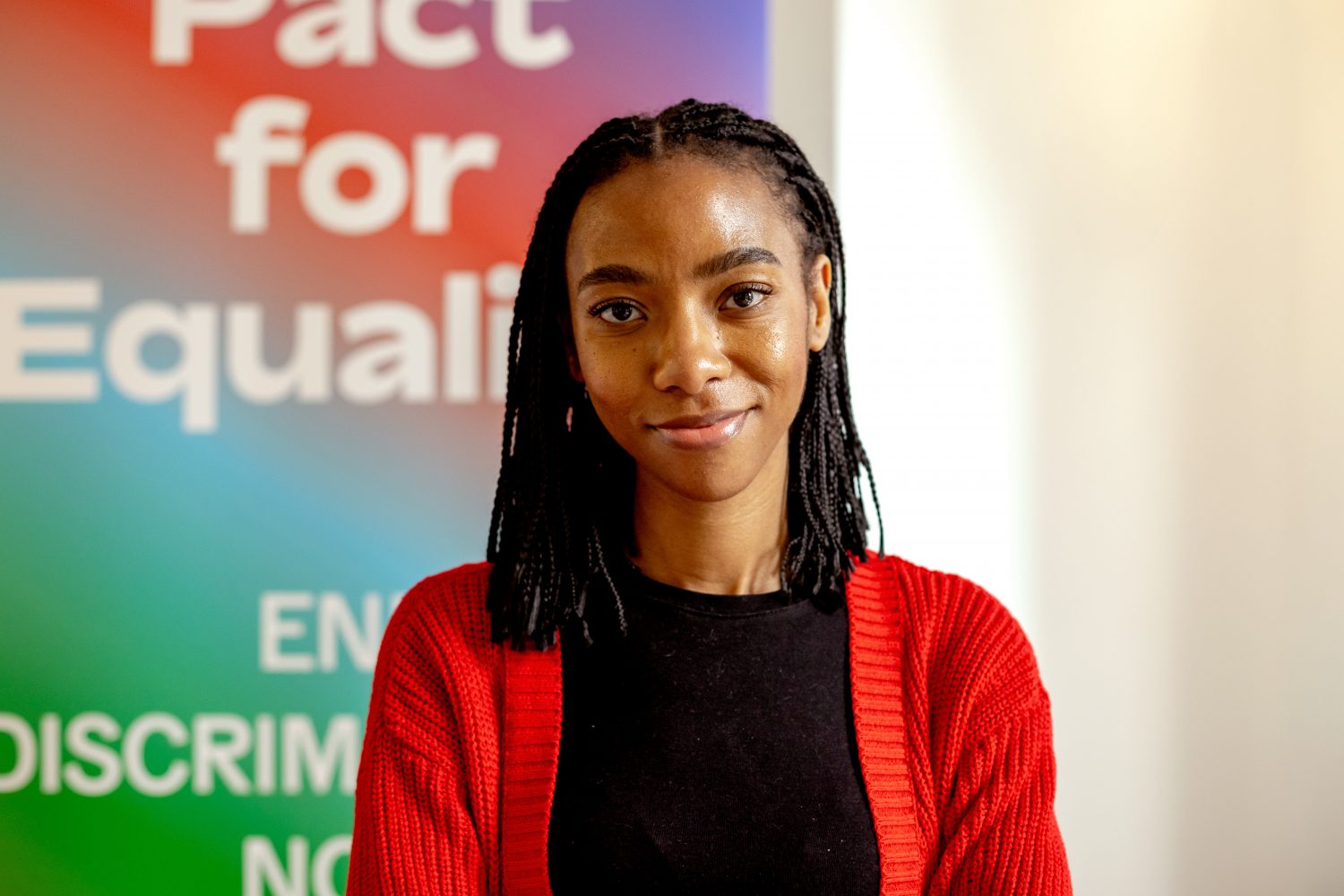
A childhood shattered by war
My name is Maguy, and I am a survivor of war and genocide in the eastern part of the Democratic Republic of Congo (DRC).
My story begins in 1992 in Bukavu, a city in the east of the DRC. My childhood was quickly turned upside down in 1994 with the genocide of the Tutsi people. Living in a border city with Rwanda, we too suffered the consequences of that genocide against. My family survived multiple assassination attempts, murderous ambushes in public places, bullets fired into our homes and landing in our beds.
We resisted until 1996, when rebel groups — formed partly in response to the genocide — invaded and took control of Bukavu and other towns in the East. Their main goal was to seize control of territories and their much-coveted, vital natural resources.
These rebel groups — the most notorious being the M23 — are financed by major imperial powers and neighboring countries. They use extreme violence to maintain control and kill without hesitation to achieve their goals. Fleeing is often the only way to survive. My family and I were forced to flee in 1996, when what is now known as the First Congo War officially began. We walked for several months from east to west, during which we had to learn to dodge bullets, recognize explosives, survive without food, and sleep outdoors in the rainforest.
We lived in and passed through several displaced persons’ camps, where tents had replaced our homes. I was only five years old, but I remember everything: the landscapes, the smell of mud, the cold and humidity of the tropical forest, the sound of bullets and explosions, the screams and cries, my mother’s terrified but determined gaze, and her relentless efforts to protect us , climbing trees to pick fruit so we could eat.
I still carry those memories vividly. I still bear the scars of the violence we survived, but above all, I mourn that stolen childhood that life taken by genocide and by wars that have
lasted for over thirty years.
More than 10 million people have died since the beginning of this war, and 6 million have been displaced. I am one of the 6 million.
But this is not only my story, nor that of other victims and survivors, it is also, indirectly, yours.
The Congo Basin is the second-largest tropical rain forest in the world, after the Amazon, and is often called the “second lung of humanity.” The Congo is also one of the richest countries in the world in terms of natural resources; gold, diamonds, uranium, cobalt, and coltan. Most of these resources are found in the eastern part of the country, particularly rich in cobalt and coltan (often called “blue gold”), two crucial minerals used to manufacture the technologies we rely on every day, smartphones, computers, and electric cars…
The sustainable development and energy transition of the Global North largely depend on the DRC and on the exploitation of its natural wealth. Western and imperialist powers have been exploiting Congo’s resources since at least the 19th century, during colonisation and continue to do so today, through ongoing wars, aided by local political complicity and the absence of strong governance to protect affected populations.
The silence around Congo
Why, even today, is this war so underreported? Yet since 2024, rebel groups — mainly M23 — have once again taken control of major cities like Bukavu and Goma, just as they did in 1996, killing thousands of civilians and causing yet another wave of displacement. This heavy silence is itself an answer, a tragic reflection of a system that ranks bodies and lives by value. In that system, racialised people here, black lives, are worth less than white lives.
Have you ever noticed the difference in media coverage between wars involving white bodies and those involving black or racialised bodies? The dehumanising, unblurred images used to depict certain conflicts are not accidental; they are a choice. A choice inherited from colonial propaganda, still perpetuating racism against these populations today. Survivors, refugees in displacement camps, and people living in Congo and across Africa are no exception. Even today, we see degrading images of them daily as if their dignity were worthless, as if there were no other way to inform without erasing their humanity.
“This system is inseparable from the history of colonization, which operated both as a project of territorial settlement and as an ideological and political structure designed to justify and perpetuate white supremacy.”
Informing is necessary, censorship would be a grave threat to democracy and to our rights and freedoms, but there are more ethical ways to report, through warnings, blurring mechanisms, and editorial lines that genuinely care about the people involved and the impact of their work on how the world perceives them.
Conflicts may sometimes need to be prioritised in the news cycle, but they must never be hierarchised morally because they all coexist within the same system of domination and exploitation by imperialist and (neo)colonial powers. Whether in Congo, Sudan, or Gaza, struggles to denounce violence and support affected people must be fought jointly, with the same strength, following the principle of convergence of struggles.
These conflicts teach us at least two harsh truths: white supremacy persists, and colonization is far from over — its deadly consequences continue to shape our world today. By white supremacy, I do not simply mean a skin color, but a social, political, and economic system built on the assumption that white people and the cultures associated with them are inherently superior. It is a system that grants privilege, safety, and visibility to some, while systematically devaluing, exploiting, and destroying the lives of others for their benefit. This system is inseparable from the history of colonization, which operated both as a project of territorial settlement and as an ideological and political structure designed to justify and perpetuate white supremacy.
Another painful lesson is that these wars and their political, socioeconomic, and environmental consequences are still not enough to convince the imperial powers benefiting from them to adopt more inclusive migration policies. On the contrary, today we see in the West in the so-called Global North a fierce rise in anti-migrant, racist, criminalising, and dehumanising policies.
Being part of the problem and the solution
Living with the pain of my stolen childhood, of our stolen lives, is an endless mourning.
Yet I am aware that, despite myself, I am now part of the problem, part of the system that sustains these mechanisms of domination and exploitation, that kills and destroys lives and exploits children to produce the technologies we use daily, myself included.
It’s a painful and shameful truth to admit. And perhaps that’s why we don’t talk more about Congo. But awareness is already a step forward, recognizing that we live in a dangerous, destructive, and deadly system is crucial if we are to break free from it.
So how do we do it? I’ve asked myself this question millions of times for my compatriots in Congo, for my family still there, for Gaza, for Sudan… Through all these examples, through my own story and those of others, I now know that the answer must be collective. Solutions must be built from the bottom up, collectively, in solidarity, and guided by the principle of Ubuntu: I am because you are. We are interconnected, interlinked; our actions have consequences on others’ lives. The smartphone or computer you’re using to read this article was built by human hands, and others are still paying with their lives to supply the raw materials needed for these technologies that accompany us every day.
Solidarity and collectivity are the keys. This solidarity includes individual actions (joining protests, contributing to mutual aid funds…) but it is above all political: building progressive, equitable, inclusive, decolonial, and sustainable policies and societies. These two dimensions, individual and institutional, are interconnected, forming a single framework that defines our world. It is up to us to decide what shape we want to give it.
“Solidarity and collectivity are the keys.”
Today, I am aware of the privileges I have and already had in 1996 that likely saved my family’s life: belonging to a wealthier social class, and having relatives living in Europe. These two factors gave us access to support that many survivors in similar situations never had and still don’t today.
Although part of my family still lives in eastern Congo, I now also have the privilege of being able, at times, to distance myself from the conflict sometimes for protection, sometimes because, like everyone else, I have normalised the act of scrolling away, in a second, from tragedy. We choose consciously (or not) not to know, to look but not to see. Because the truth is hard and ugly to confront, and it evokes discomfort or worse, it forces us to face our collective flaws and failures as a society.
So do you know what’s happening in Congo? Probably. And if you didn’t, did you try to find out or did you choose to avoid it? Do you realise what is happening there, and the lives being destroyed to sustain the comfort you enjoy daily? These are uncomfortable questions, I know, but they are necessary if we are to understand what’s truly at stake: our humanity.
So do you know what’s happening in Congo? Probably. And if you didn’t, did you try to find out or did you choose to avoid it?
A final reflection
It is paradoxical to be writing these lines on a MacBook whose materials probably come from my native region.
But remaining silent would make me complicit. So I write, hoping that these words make you realise that war is closer to you than you think, whether in the DRC or in Palestine. Above all, I hope you understand that we all have the power to make the world a better place but we must at least have the courage not to remain silent.
Because, indeed, sharing is caring.