Jul 1, 2026
Rivers of Democracy Diary | The Vienna Route
Reimagining the Danube as a Political Subject
Written by Olena Sulikovska, Residency Participant
Location: Vienna, Austria (Danube Island, Lobau, Badeschiff)
Dates: 18-21 June 2026
Day 1: Crossing Borders, Building Intimacy
My first day began before I even reached the water: twenty-one hours of travel to Vienna that, by the end, had stopped feeling like transit and started feeling like the argument itself, that a border is not a wall but something you can cross, and a river, in the same way, connects more than it divides.
On the Badeschiff, in the Opening Circle, we mapped our individual relationships to waterways one by one, then talked about what it would mean to build “intimacy with the river” rather than simply study it. Ideas for the days ahead surfaced loosely, hydrophone soundscapes, salon-style democratic debates, nothing fixed yet, just directions. We closed with a shared dinner and a first planning session, the start of a collective narrative none of us could have written alone.
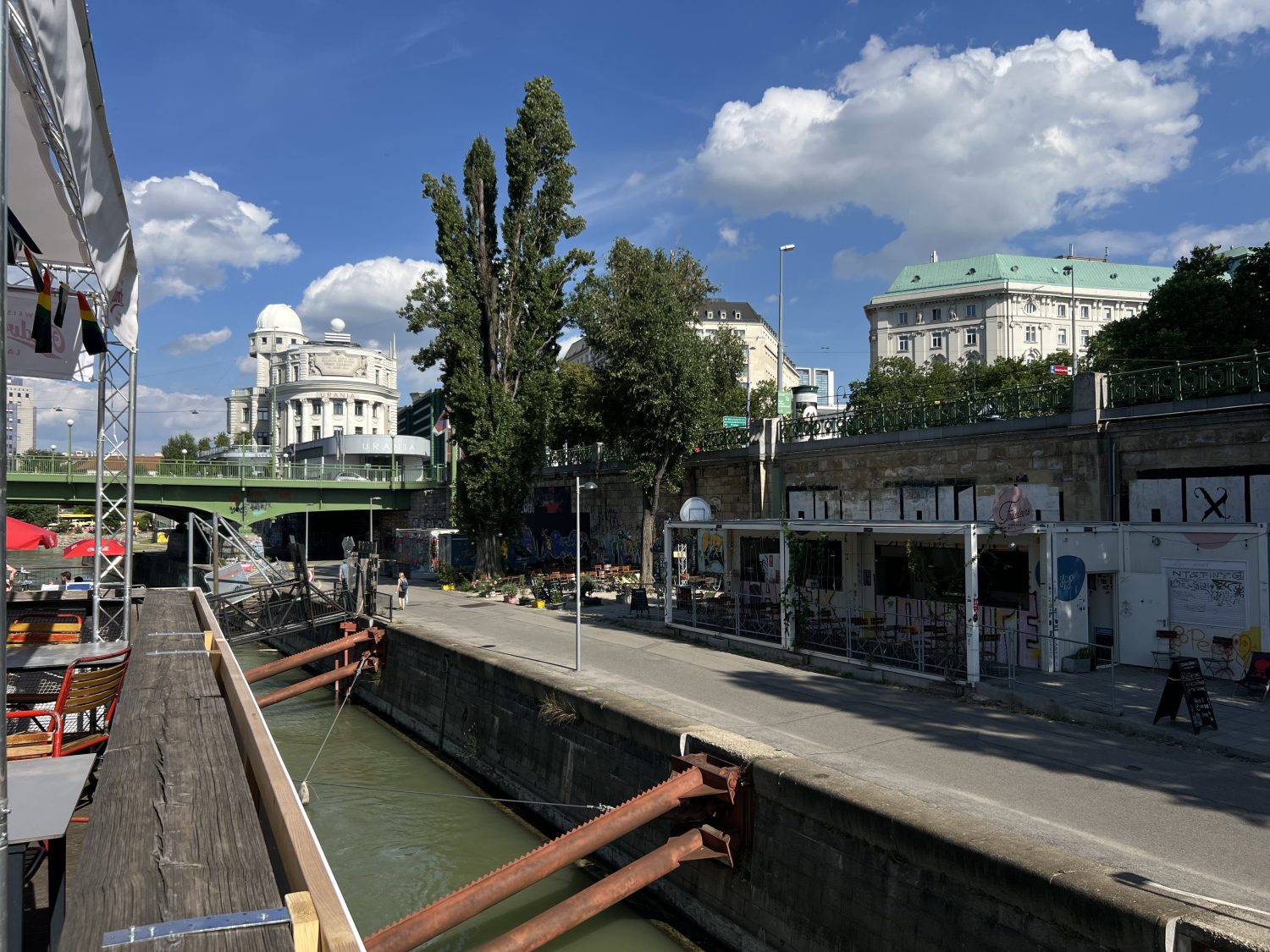
Day 2: Somatic Grounding and Water Dystopias
Theme: Embodied Governance and Global Solidarity
We began on the ground, literally: twenty minutes of breath meditation and somatic centering before turning to the practical work of shaping our first public event.
The workshop opened with dance, not as decoration, but as the fastest way past the distance between strangers, and closed with somatic reflection, after we had spent the middle of it holding stories of “water dystopias” gathered from across the globe. Between those two points, the conversation moved into indigenous enlightenment and collective governance: what it might mean for a river, rather than a parliament, to hold a model of democracy.
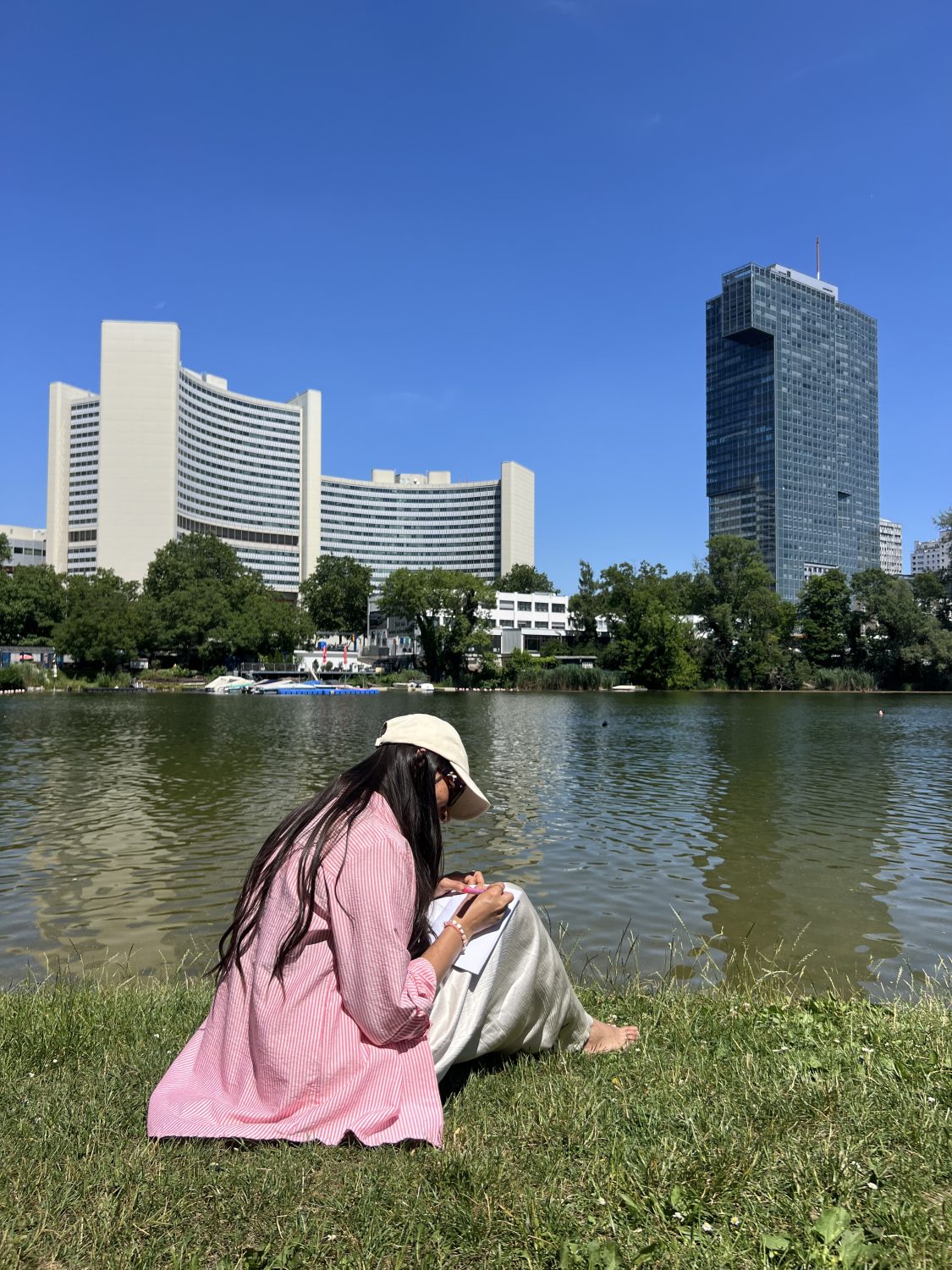
Day 3: The Cyborg Landscape and Reclaiming the Common
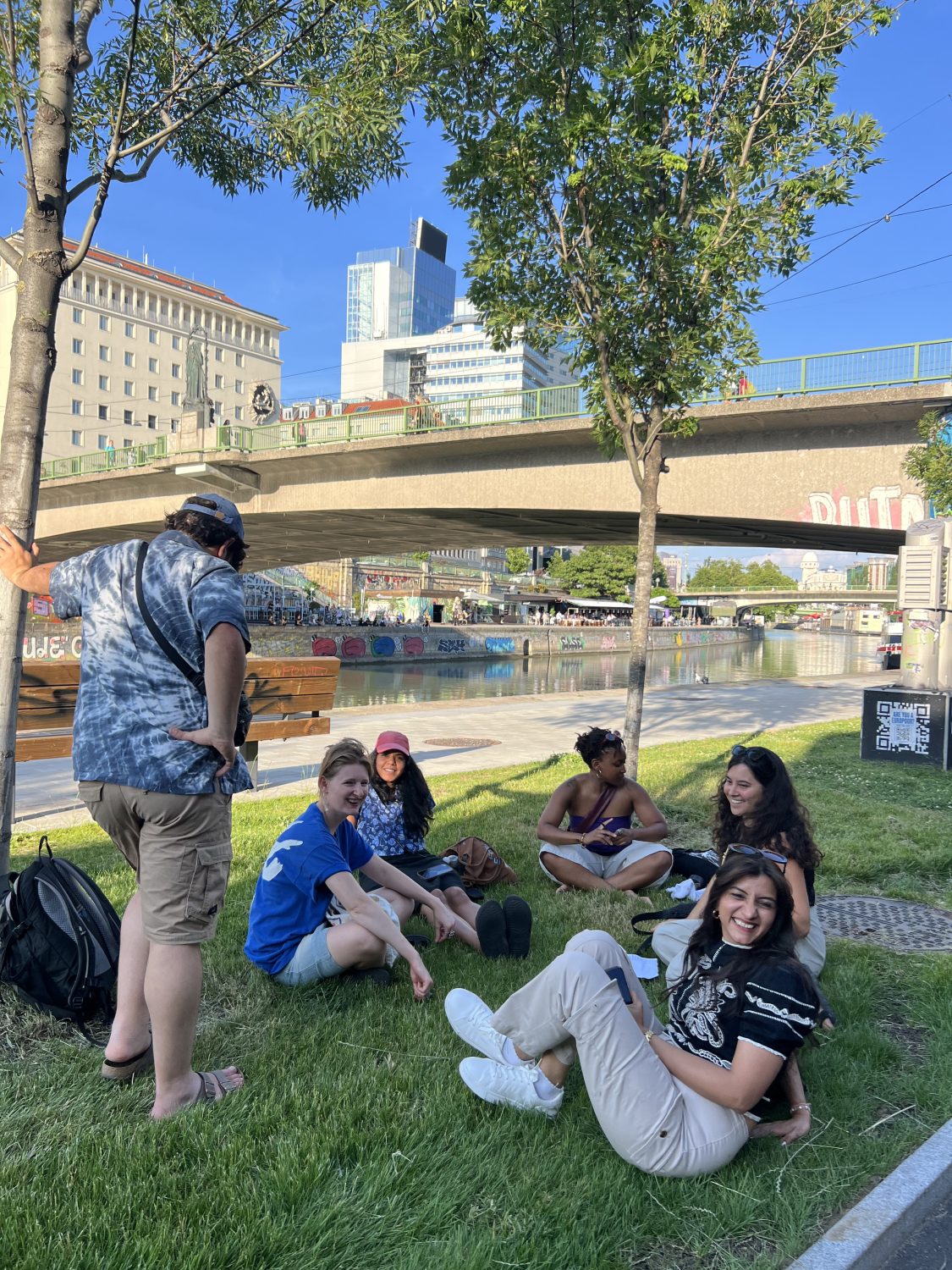
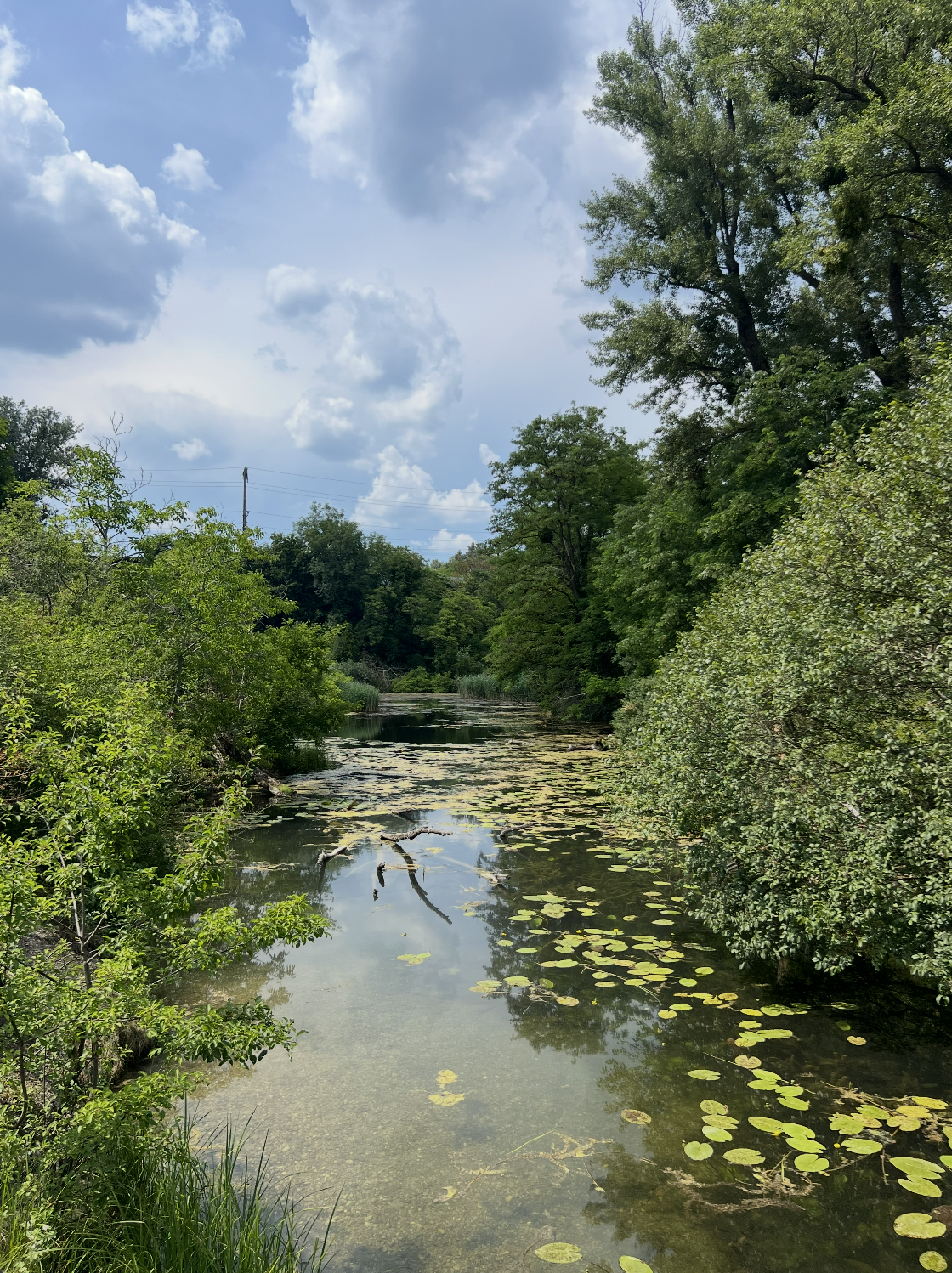
Field research with Julia. The day opened on the Danube Island and the Lobau biosphere reserve, guided by radio journalist Julia. The island turned out to be an argument in itself: 21 kilometres of concrete built during “Red Vienna” with machinery brought over from the Suez Canal, machinery that, in the process, introduced invasive species no one had planned for. Engineering and nature, permanently tangled. Julia walked us through the Lobau’s darker layers too: forced labour camps and oil harbours from the Nazi era, bomb craters that decades later have become ponds thick with biodiversity. We talked about the river as an archive of sound, the reintroduction of the Sterlet sturgeon, and hydrophones repurposed from industrial monitoring to instead listen to the voice of sediment moving through water.
Lunch at Schillwasser. At Café Schillwasser, on the Kleine Stadt Farm, Austria’s largest organic farm, we sat among the animals, berries and bio-plants after days of nearly 35°C heat. A storm broke while we were there, and we watched the rain from inside, arriving almost on cue, as if the river we’d spent the morning discussing had found its way to us from above.
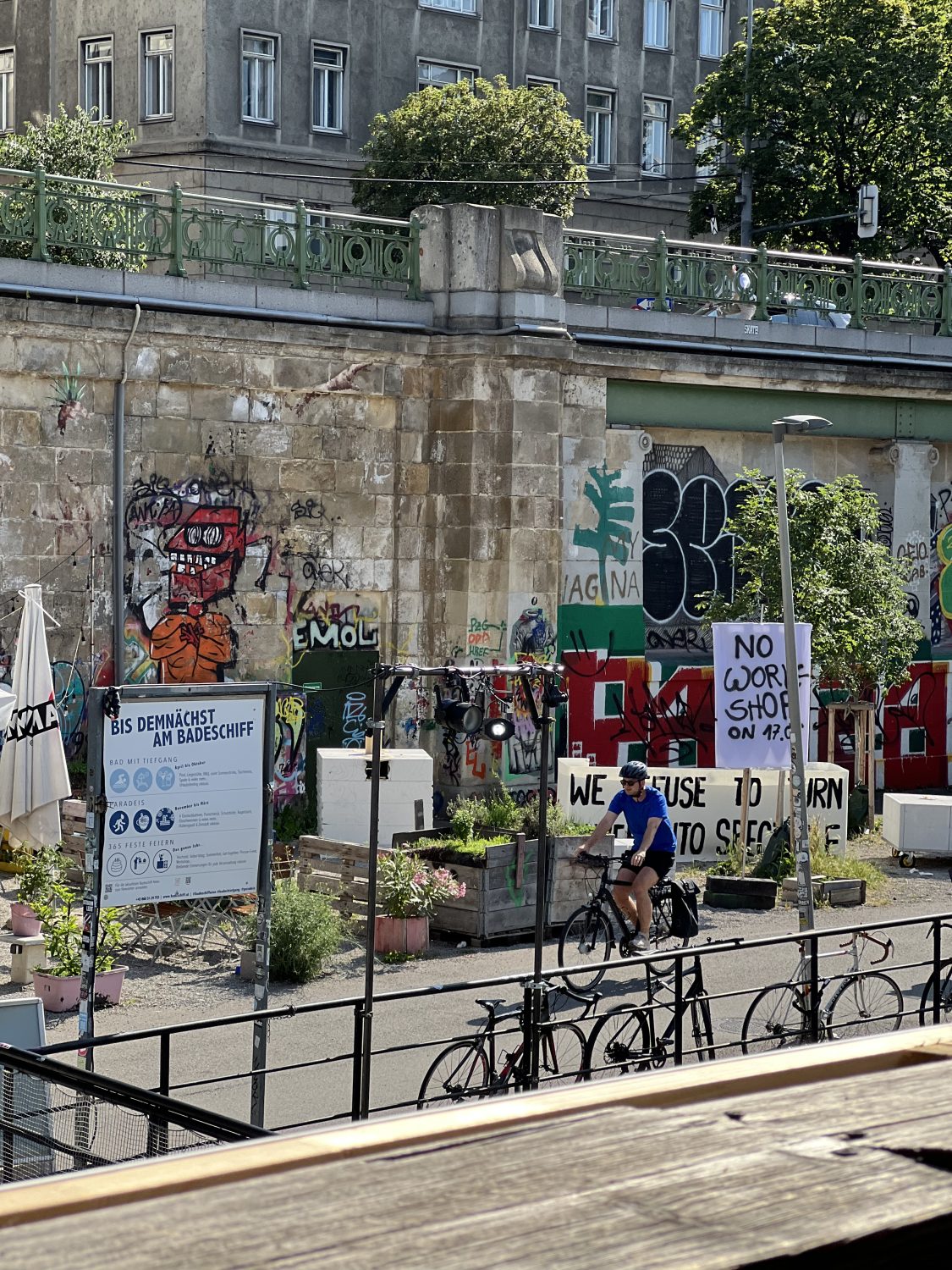
Structuring the zine. Back at the Badeschiff, the day turned from observation to construction. We divided roles for the collective zine, working out how field recordings, material archives and political reflections would become a physical publication, and how to do that without flattening the voices of the activists we’d met along the way.
Evening. We closed by talking through the day’s contrasts, the swim, the storm, and planned the residency’s final piece: building an acoustic boat with Martin, a way of putting our ideas about democracy literally back on the water.
Day 4: The Acoustic Boat and Sonic Democracy
The journey. We biked thirty minutes to the river, and the ride itself became part of the work, a slow build of intention rather than a simple commute.
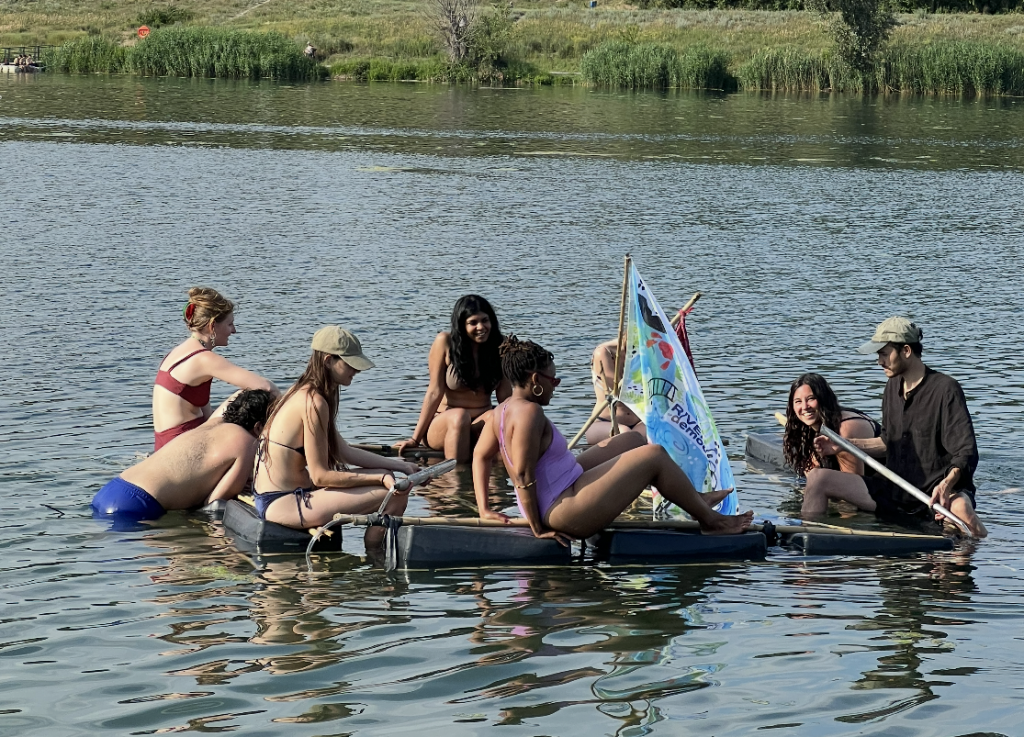
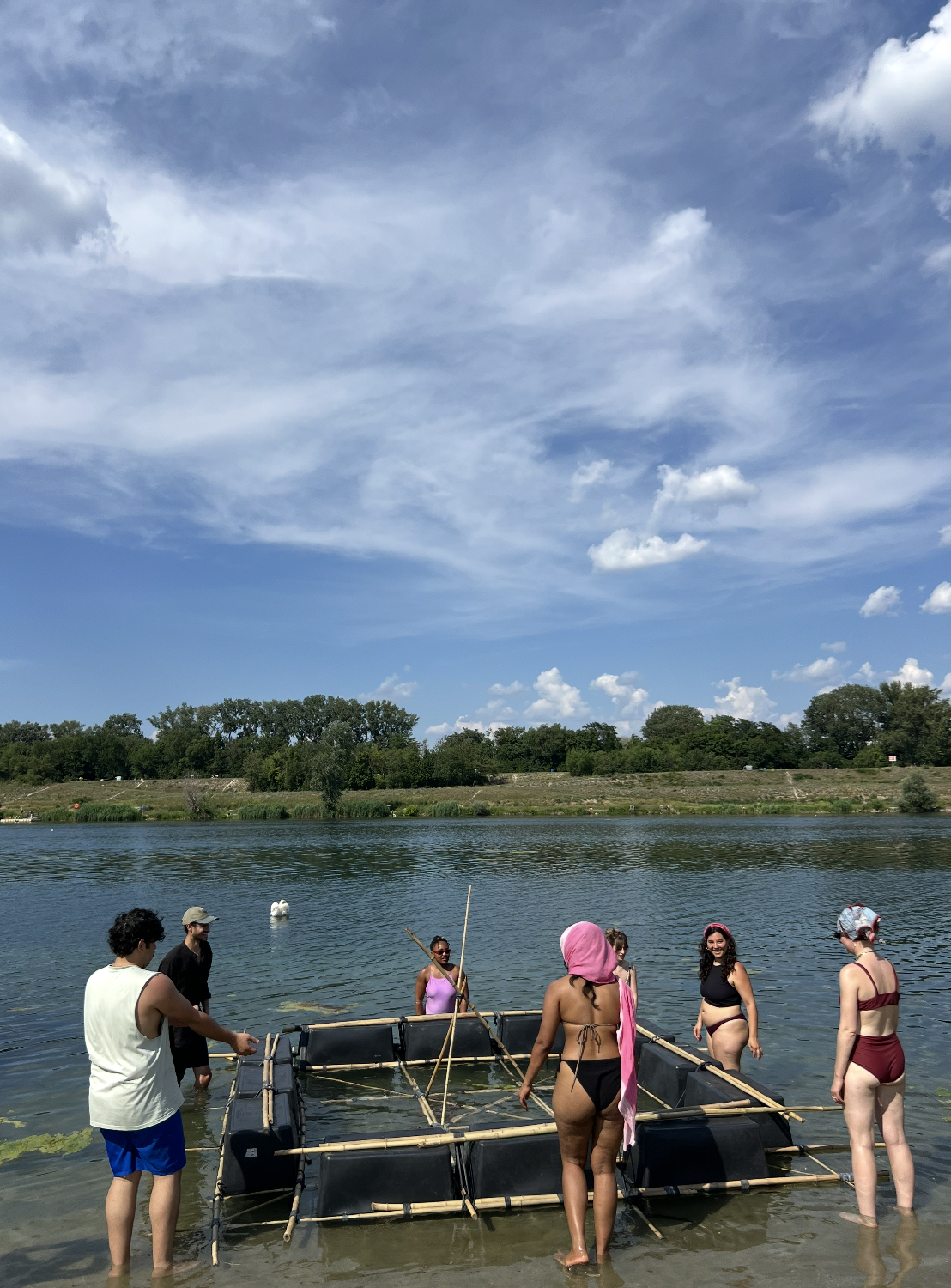
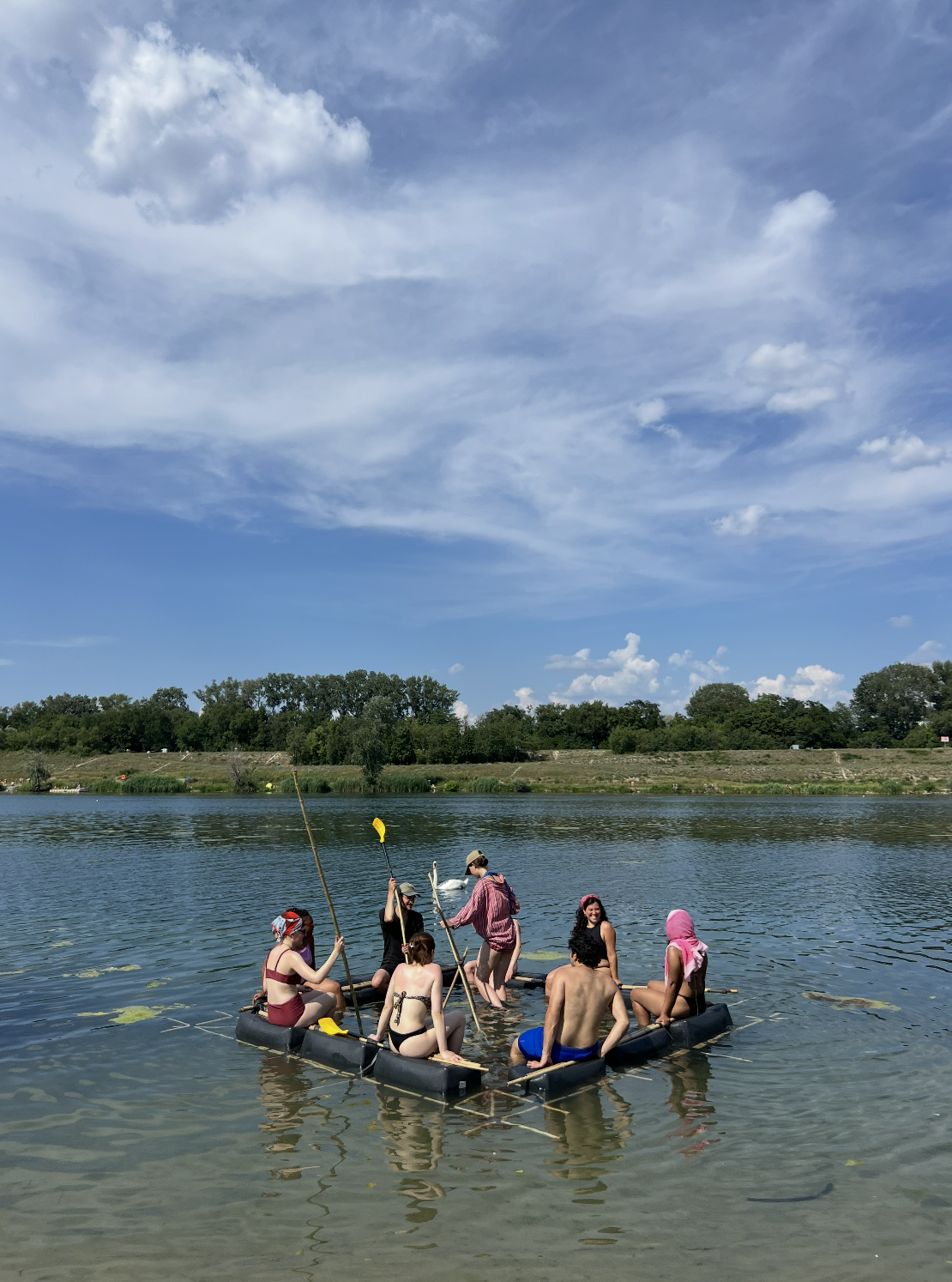
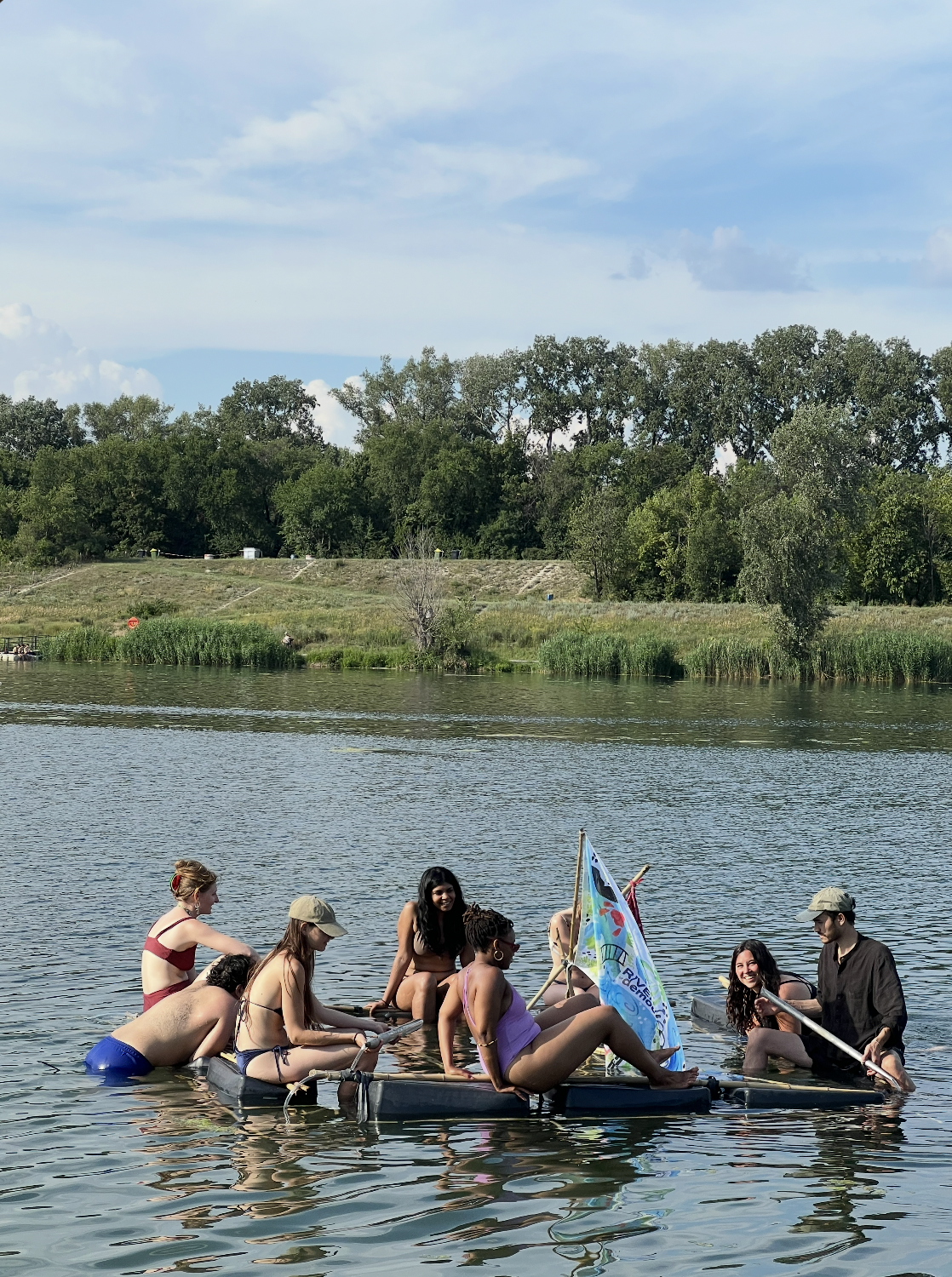
Building the boat. Under a tree near a fishing spot, in the heat of the June 21st solstice, we built our raft: plastic boxes and sticks, tied and re-tied, Afro-jazz running underneath the whole process. We adjusted each other’s work as we went, and the labour itself became the ritual.
Final immersion. We kept returning to the water between tasks, and closed the residency with a swim, reclaiming the Danube one last time. By then, the line between observing the river and being part of it had mostly dissolved.
Rivers of Democracy is a transnational initiative that seeks to reimagine rivers not only as ecological systems but as subjects of rights, intertwined with human communities, democratic participation, and cultural expression. Flowing across borders, the project transforms Europe’s rivers into corridors of encounter, entry points for rethinking democracy, environmental justice, and rural revitalisation. The project aims to explore alternative ways of engaging with democracy and how those can emerge across borders, grounded in ecological interdependence, collective decision-making and shared responsibility.
Follow the next routes